

Breast Reduction Surgery in Boca Raton
Breast Reduction with Dr. Vincent Riccelli
Breast reduction surgery, also called reduction mammoplasty, can reduce the physical burden of overly large breasts while creating a lighter, more balanced, and proportionate breast shape.
At Ennis Plastic Surgery, Dr. Vincent Riccelli specializes in breast reshaping, breast rejuvenation, and breast revision surgery. He creates individualized breast reduction plans for patients who want relief from heaviness, neck and back pain, shoulder grooves, skin irritation, activity limitations, or difficulty finding supportive clothing.
A breast reduction is not simply about making the breasts smaller. The procedure also lifts and reshapes the breast tissue, repositions the nipple and areola, removes excess skin, and improves the relationship between the breasts and the rest of the body.

Breast Reduction Quick Facts
Functional Relief with Refined Breast Reshaping
Procedure
Reduction mammoplasty removes excess breast tissue, fat, and skin while lifting and reshaping the breasts.
Symptoms Improved
Neck pain, back pain, shoulder grooves, skin irritation, heaviness, activity limitations, and clothing difficulties.
Best For
Patients whose breast size feels disproportionate to their frame or causes physical or emotional discomfort.
Recovery
Temporary swelling, soreness, support-bra use, and activity restrictions are expected during healing.
Understanding Reduction Mammoplasty
More Than a Cosmetic Procedure
Large, heavy breasts can affect far more than appearance. The weight of the breasts may contribute to persistent neck, shoulder, and upper-back discomfort. Bra straps can dig into the shoulders, skin can become irritated beneath the breast fold, and exercise may feel uncomfortable or impractical.
Breast reduction can address those functional concerns while also improving breast shape. Because the surgery includes tissue removal and lifting, the result is typically smaller, lighter, and more elevated than the preoperative breast.
Patients often describe the change in terms of comfort first: easier movement, less pulling through the shoulders, better clothing fit, and greater freedom during exercise. The aesthetic benefit is a breast shape that looks more proportionate to the chest, waist, and overall frame.
The right reduction is not determined by cup size alone. Dr. Riccelli considers breast width, tissue composition, body frame, skin quality, nipple position, symptoms, and the patient’s preferred result.
Meet Dr. Vincent Riccelli
Learn more about Dr. Riccelli’s training, surgical focus, and personalized approach to breast reshaping, breast revision, and body contouring.
Signs You May Benefit
When Breast Size Begins to Affect Daily Life
Breast reduction may be appropriate when breast weight creates physical symptoms, limits activity, or feels out of proportion with the rest of the body.
Back Pain
Heavy breasts may contribute to chronic upper-back discomfort, muscle fatigue, and postural strain.
Neck and Shoulder Pain
Patients may feel ongoing pulling through the neck and shoulders, especially after long days or physical activity.
Bra Strap Grooves
Supportive bras may leave deep shoulder indentations when the straps carry significant breast weight.
Skin Irritation
Moisture and friction beneath the breasts can cause irritation, rashes, tenderness, or recurrent discomfort.
Exercise Limitations
Running, strength training, sports, and other activities may feel uncomfortable or difficult despite supportive clothing.
Dr. Riccelli’s Goal
Reduce breast weight while preserving attractive shape, symmetry, nipple position, and proportion with the patient’s frame.
Candidate Planning
Who Is a Good Candidate for Breast Reduction?
Good candidates are generally healthy, at a reasonably stable weight, and bothered by breast heaviness, pain, skin irritation, restricted activity, or disproportionate breast size.
Weight can affect breast size because breasts contain both glandular and fatty tissue. For some patients, weight loss may reduce breast volume. For others, significant heaviness remains even after reaching a stable weight.
Younger adults may be candidates when breast size causes substantial physical or emotional stress. Patients considering future pregnancy should understand that pregnancy, breastfeeding, weight changes, and aging can alter the result.
Ideal candidates often have:
- Persistent neck, back, or shoulder discomfort
- Breast heaviness that affects posture
- Skin irritation beneath the breasts
- Difficulty exercising comfortably
- Breasts that feel disproportionate to the frame
- Realistic expectations about scars and recovery
Procedure Details
How Breast Reduction Surgery Works
Breast reduction is customized around the amount of tissue to be removed, breast shape, skin quality, nipple position, chest width, asymmetry, and the patient’s desired proportions.
Detailed Planning
Dr. Riccelli evaluates breast width, volume, skin excess, nipple position, asymmetry, and the amount of reduction needed.
Incision Selection
The incision pattern is selected according to anatomy and the degree of access needed for tissue removal and reshaping.
Tissue Removal
Excess glandular tissue, fat, and skin are removed to reduce breast size and weight.
Breast Reshaping
The remaining breast tissue is lifted and shaped to create a firmer, more supported contour.
Nipple and Areola Position
The nipple and areola are moved to a higher position, and an enlarged areola may be reduced when appropriate.
Customized Reduction
The goal is not simply maximum tissue removal. It is the right balance of relief, shape, proportion, circulation, and long-term support.
Incision Planning
Common Breast Reduction Incision Patterns
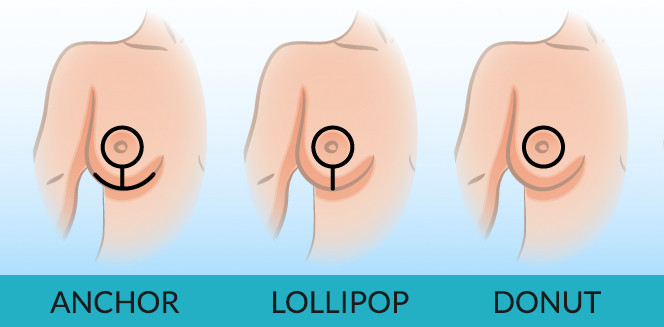
The incision patterns used for breast reduction are similar to those used for a breast lift, because both procedures reshape the breast and reposition the nipple.
A vertical or “lollipop” pattern includes an incision around the areola and down to the breast crease. An inverted-T or “anchor” pattern adds an incision along the breast fold and may be necessary when more tissue and skin must be removed.
A limited periareolar approach is less common for meaningful breast reduction because it does not provide the same access for tissue removal or major reshaping.
The incision should match the anatomy. Choosing an incision that is too limited can compromise shape, skin removal, and nipple position.
Scars & Surgical Tradeoffs
Understanding Breast Reduction Scars
Breast reduction creates permanent scars. The pattern depends on how much tissue and skin must be removed and how much reshaping is required.
Scars generally fade and soften over time, but they do not disappear completely. Most patients accept that tradeoff because the improvement in comfort, movement, proportion, and clothing fit can be significant.
Breast reduction may provide:
- Smaller and lighter breasts
- Improved proportion with the torso
- Less neck, shoulder, and back discomfort
- Easier exercise and physical activity
- Improved clothing and bra fit
- Better breast shape and nipple position
Choosing the Right Size
How Much Smaller Should You Go?
Patients often arrive with a preferred cup size, but bra sizing varies widely between brands. Surgical planning is more precise when based on anatomy, symptoms, body proportions, and the amount of tissue that can be removed safely.
Dr. Riccelli discusses how small the patient would like to be, how much breast volume is needed to maintain attractive shape, and whether the primary goal is symptom relief, a more athletic silhouette, easier clothing fit, or a combination of these.
In some patients, very aggressive reduction may affect nipple circulation or breast shape. The final plan balances meaningful size reduction with safety and proportion.
Related Procedures
Breast Reduction vs. Breast Lift
Breast Reduction
Removes a meaningful amount of breast tissue and skin to reduce weight, size, and physical symptoms while lifting the breast.
Breast Lift
Primarily reshapes and elevates the breast. It may remove some tissue, but its main purpose is position and shape rather than major size reduction.
Revision or Implant Concerns
Patients with existing implants may need a broader plan involving implant removal, implant exchange, or breast revision rather than reduction alone.
Recovery & Results
What to Expect After Breast Reduction Surgery
Recovery varies according to the amount of reduction, incision pattern, tissue reshaping, and the patient’s individual healing response. Patients should expect temporary swelling, bruising, soreness, tightness, and changes in breast or nipple sensation.
Dressings and a supportive surgical bra may be used during early healing. Some patients may need temporary drains, depending on the procedure and surgeon’s plan. Heavy lifting, strenuous exercise, and upper-body activity are restricted until Dr. Riccelli confirms that healing is progressing appropriately.
Many patients notice reduced breast weight immediately, although swelling initially obscures the final shape. The breasts gradually soften and settle over the following weeks and months, while scars continue to mature.
Results can be long lasting, but pregnancy, weight change, aging, hormones, and gravity may continue to affect the breasts over time.
Your recovery plan may include:
- A supportive surgical bra
- Incision and dressing care
- Medication guidance
- Temporary lifting restrictions
- Gradual return to exercise
- Follow-up visits to monitor healing
Pregnancy & Breastfeeding
Can You Breastfeed After Breast Reduction?
Breast reduction may affect the ability to breastfeed because glandular tissue and ducts are altered during surgery. Some patients can breastfeed afterward, but no surgeon can guarantee that breastfeeding will remain possible.
In most standard techniques, the nipple remains attached to underlying tissue and its blood supply. In rare cases involving extremely large or pendulous breasts, a free nipple graft may be considered. This approach has different implications for sensation and breastfeeding and is discussed only when relevant.
Patients who strongly wish to breastfeed in the future should discuss those priorities during consultation. Pregnancy can also change breast volume and skin support after surgery, although many patients choose reduction before pregnancy when symptoms are significant.
Why Ennis Plastic Surgery
Breast Reduction in a Boutique Surgical Setting
Ennis Plastic Surgery is known for refined aesthetic care, personalized planning, and natural-looking results. Breast reduction patients receive private, individualized attention in a Boca Raton setting designed around comfort, discretion, and surgical excellence.
The consultation focuses on both relief and appearance. The goal is to reduce breast weight while creating a balanced shape that fits the patient’s chest, waist, shoulders, and overall frame.
Meet Your Surgeon
Dr. Vincent Riccelli
Dr. Vincent Riccelli is a plastic surgeon specializing in breast reshaping, breast revision surgery, and body contouring. His training includes Vanderbilt University School of Medicine, plastic surgery residency at UT Southwestern, and advanced international exposure to aesthetic surgery techniques.
For breast reduction patients, Dr. Riccelli evaluates breast size, weight, skin quality, nipple position, symmetry, chest width, physical symptoms, and the patient’s preferred proportions.
His approach is built around relief, proportion, precision, safety, and individualized care.

Breast Reduction FAQs
Frequently Asked Questions
What is breast reduction surgery?
Breast reduction, or reduction mammoplasty, removes excess breast tissue, fat, and skin while lifting and reshaping the breasts into a smaller and more proportionate contour.
Can breast reduction help with neck and back pain?
It may help reduce discomfort related to breast weight, including neck, shoulder, and upper-back strain. Individual results depend on the cause of the symptoms and the patient’s overall health.
Does breast reduction include a lift?
Yes. Breast reduction usually includes lifting and reshaping because the nipple and breast tissue must be repositioned after excess tissue and skin are removed.
How much smaller will my breasts be?
The amount of reduction depends on anatomy, symptoms, body proportions, tissue quality, safety, and the patient’s goals. Exact cup size cannot be guaranteed.
Will I have scars after breast reduction?
Yes. Scars are permanent but generally fade and soften over time. The pattern depends on the amount of tissue and skin that must be removed.
Can breast reduction improve shoulder grooves?
Reducing breast weight may lessen the pressure placed on bra straps and shoulders, although existing grooves may not disappear completely.
Can I breastfeed after breast reduction?
Breastfeeding may still be possible, but surgery can reduce milk production or affect the ability to breastfeed. This should be discussed before surgery.
Will nipple sensation change?
Temporary sensation changes are common. Permanent reduction or loss of sensation is possible, especially with larger reductions or more extensive surgery.
How long is recovery after breast reduction?
Recovery varies. Patients should expect swelling, soreness, support-bra use, incision care, and restrictions on lifting and exercise during healing.
Can breast reduction be combined with another procedure?
Yes. Depending on health, anatomy, and safety, it may be combined with body contouring or another breast procedure. Combination planning is individualized.
What if I already have breast implants?
Patients with implants may need a plan involving implant removal, implant exchange, lift surgery, or broader breast revision. Implant concerns can also be evaluated through the practice’s AI-assisted breast implant screening service.
Can I view breast reduction before-and-after photos?
Yes. Ennis Plastic Surgery maintains a breast reduction before-and-after gallery featuring actual patient results.
Begin Your Consultation
Schedule a Breast Reduction Consultation with Dr. Riccelli
If heavy breasts are affecting your comfort, posture, activity, clothing choices, or confidence, Dr. Vincent Riccelli can help you understand whether breast reduction surgery is appropriate for your anatomy and goals.